Blind tasting is much more than just an exercise in recognizing wines. Cécile compares wine to art and believes that each wine tells a story that tasting reveals. Between tannins and emotions, Cécile lets the wine speak. A passionate trainer and teacher of WSET Levels 2 and 3 in wines at the WISP campus in Toulouse, this article explores her unique vision of this demanding discipline—at the crossroads of science and art.
A Passion Turned into Expertise
Reading between the aromas is Cécile Debroas Castaigns’ passion. From her very first steps into the world of wine, she was fascinated by blind tasting. Today, it has become her main hobby. She participates in intensive weekly sessions with the Toulouse tasting club “In Vino Veritas” and even competes in prestigious tasting championships to further refine her palate and deepen her understanding of wine.
Her contagious enthusiasm and energy make her an inspiring trainer, bringing both dynamism and rigor to the classroom. Currently pursuing the Master of Wine program, she is constantly expanding her knowledge, convinced that learning is an endless journey in the world of wine.
Wine Tasting Is Like Art
Cécile likes to say that blind tasting is akin to art, just like painting or music. Before fully appreciating a painting or a symphony, one must first understand the codes and fundamentals. The systematic tasting method of WSET follows the same principle. It provides a rigorous analytical framework that allows for an objective evaluation of a wine’s quality. According to Cécile, every glass of wine is a landscape waiting to be explored.
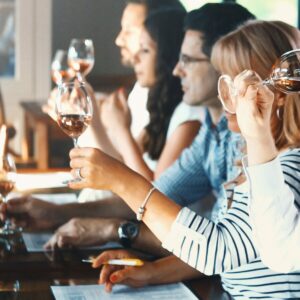
When she teaches, Cécile enjoys making the experience fun and interactive. For instance, in the WSET 2 wine course she has students compare four different sparkling wines to identify their respective production methods—traditional for Champagne and Cava, tank method for Prosecco, and other variations. These practical exercises help learners refine their sensory perception and better understand the nuances of winemaking styles.
Wine Tasting Is More Complex Than It Seems
Contrary to common belief, blind tasting is not just about recognizing a terroir or grape variety by memory. It is primarily about placing a wine in its geographical, climatic, and cultural context. The theoretical knowledge from WSET is a major asset in this exercise, allowing one to identify a wine’s origin by analyzing its organoleptic characteristics.
Take Pinot Noir, for example—its aromatic profile and structure vary significantly depending on whether it comes from France, Germany, New Zealand, or Ontario. Climate, soil, topography, altitude, and traditional viticultural practices all play a crucial role in shaping a wine’s identity. Blind tasting goes far beyond simple grape variety recognition, offering a detailed analysis of production conditions. As Masters of Wine say, “Taste like a detective and argue like a lawyer.”
Wine Tasting Is an Accessible Skill for Everyone
In France, wine is part of the culture, yet many people hesitate to explore wine tasting. “I like it or I don’t like it,” we often say. And indeed, pleasure is the main thing we seek in wine! However, tasting knowledge goes beyond personal preference. For Cécile, it is essential to demystify this learning process: “There’s no need to be afraid—we are all capable of developing our nose and palate and evaluating a wine with a bit of knowledge.” Training and curiosity are key to refining perception and enriching sensory experience.
She aligns with Salvador Dalí’s vision, who said, “He who knows how to taste never drinks wine again but tastes secrets.” For her, tasting is an initiation journey that, beyond gustatory pleasure, reveals the winemaker’s intention, the land’s labor, and the expression of a terroir. And when one loves wine, knowing the theory enhances the appreciation even more. Knowledge amplifies pleasure.
Blind tasting is a demanding practice that combines science, intuition, and passion. Through a structured and educational approach, Cécile Debroas Castaigns teaches WSET students the art of deciphering wines with precision and sensitivity. By blending theoretical rigor with playful experiences, she transforms tasting into a moment of discovery and sharing—accessible to anyone eager to unlock the mysteries of wine.
Discover WSET 2 and WSET 3 wine courses with Cécile in Toulouse