


Frost is a well-known enemy of the winemaker, especially after the budding periods. There are several periods of frost, each with different consequences on the vine. Preventive and protective measures are put in place every year to avoid crop loss for the upcoming vintage.
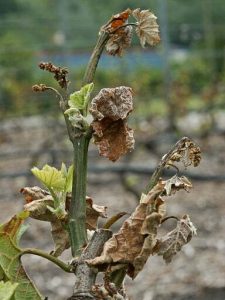
Common frost periods in France are recorded in winter when the vine’s cycle is dormant. These frost periods can cause problems to the trunk (wood) and future buds if temperatures drop below -15°C for extended periods. The plant tissues cannot withstand such negative temperatures.
Early autumn frosts prematurely trigger the plant’s dormancy, noticeable when temperatures drop below -2°C to -3°C. This manifests in the leaves falling and can disrupt the lignification process, affecting the plant’s resource storage for winter.
Finally, spring frosts are the most feared by winemakers as they occur when the plant has resumed its vegetative cycle. According to popular tradition dating back to the Middle Ages, these frosts can occur up to the Ice Saints around May 11, 12, and 13. After this date, the risk of frost is nearly nil. There are two types of spring frosts:
White frosts: These involve ice deposition from water vapor through nocturnal radiation. It’s the same phenomenon as dew coupled with low or negative temperatures (below 2°C). These frosts mainly affect low slopes and humid areas.
Black frosts: Often cause more significant damage. Cold, dry air (between -5°C and -10°C) sweeps across vineyards, potentially destroying young shoots and thus the upcoming harvests.
These frosts do not damage the trunk’s longevity but can kill the buds. Depending on each plot’s frost exposure, the winemaker can analyze and prune the vine accordingly if counter-buds start to grow, thus saving some of the harvest.
Preventive methods are applied well before the frost arrives and are crucial for the winemaker to know, especially during planting. The choice of the plot is very important; if possible, avoid plots in hollows or valley bottoms where cold air accumulates. Similarly, plots surrounded by dense hedges favor frost as they prevent cold air circulation. In areas prone to autumn or winter frosts, the winemaker should opt for early lignification grape varieties (early plant resource storage). In areas sensitive to spring frosts, it’s recommended to choose late-budding grape varieties and adapt the pruning so that the shoots are not too close to the ground.
These preventive measures are not always enough, and quick action is needed in the face of frost exposure. There are several direct protection methods:
Hilling or mounding the vines: This method, mainly used in Canada or Central Europe to protect against winter frosts, is also practiced in France. It involves covering the vine trunks with soil to protect them from very low temperatures.
Paraffin candles and fuel heaters: Placed between the vine rows to maintain sufficient warmth at the base of the vines during the night. This method is reserved for winemakers with small areas due to the labor it requires. They are effective up to temperatures around -4°C to -5°C.
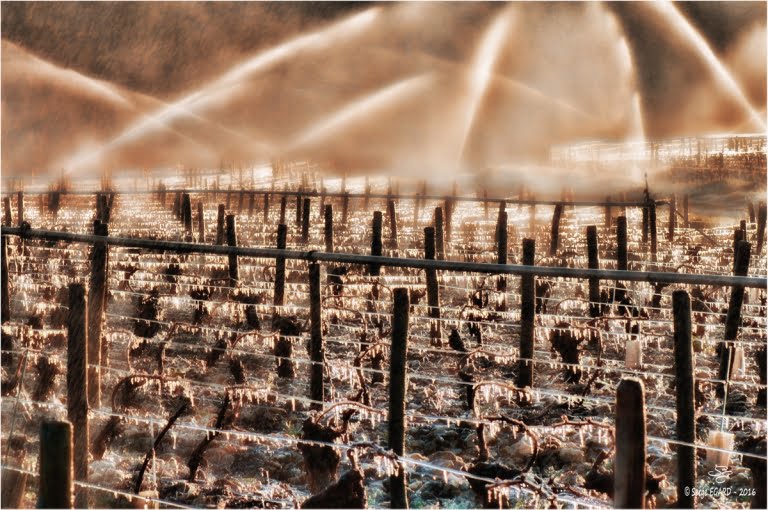
Water spraying: This method involves watering the vines at night when frost forms. It works similarly to an igloo. The water droplets freeze and enclose the buds at 0°C, protecting them from a much lower outside temperature. Winemakers use sprinklers placed every 15 to 20 meters in the vineyards. The technique is costly as a large amount of water is needed to cover one hectare (50m3 of water per hour per hectare).
Air mixing: This method involves replacing the cold air layer near the ground with a warmer air layer higher up. Propellers are placed in the vineyard. For a small anecdote, New Zealand once used many helicopters to achieve the same action, which was heavily criticized from a sustainable development perspective. A propeller can mix the air over 4 hectares. This technique can raise the vineyard temperature by 1°C to 4°C. However, the equipment is extremely costly and very noisy.
Often, winemakers remain powerless against these frost episodes and may not have the means to react quickly to late frosts.